Pigmentation and Melasma: How to Treat Them Without Making Them Worse
Part of: Melasma & pigmentation
Pigmentation is not one diagnosis. This guide separates melasma, post-inflammatory pigment and sun spots, and explains why photoprotection and controlled treatment beat aggressive routines.
Flagship Guide · 4 min read · August 22, 2026
Written and medically reviewed by Dr. Yousef Abo Zarad · German board-certified dermatologist · Last reviewed: August 2026
The short answer
Not every brown patch is melasma, so the plan starts with the type of pigmentation. Then daily broad-spectrum sun protection, and gradual topical treatment that in many cases comes before devices.
What usually makes pigmentation worse is irritation and aggressive treatment. Melasma in particular tends to come back, so it needs a maintenance plan after it improves, not one strong session.
Start with the diagnosis
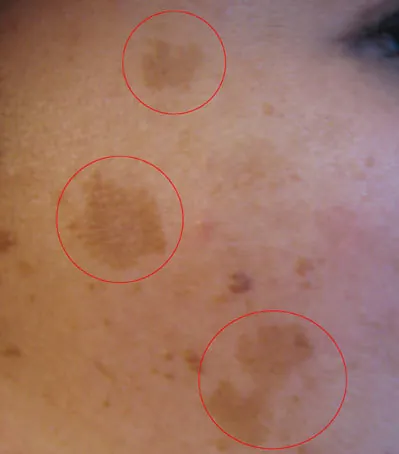

Melasma, post-inflammatory hyperpigmentation, solar lentigines and pigment from irritation can look similar to patients but differ in cause, prognosis and treatment risk.
When the diagnosis is wrong, aggressive laser or peeling can turn treatment into another source of pigment.
A quick color map
- Symmetrical patches on the cheeks or forehead that keep coming back → think melasma and a long-term plan, not one removal session.
- A mark after a pimple or inflammation → treat the cause of the inflammation first, then the pigment it left.
- Well-defined sun spots → device options may suit them once the diagnosis is confirmed.
- A new irregular color or a spot that is changing → do not treat it as cosmetic before a diagnosis.
- Pigment with ongoing irritation from the routine → stop the irritation before adding a stronger lightening product.
Photoprotection is treatment
- Use broad-spectrum SPF 30 or higher consistently.
- Tinted sunscreens containing iron oxides can add visible-light protection for people prone to melasma and persistent dark marks.
- Shade, hats and reducing direct exposure matter when pigmentation is light-sensitive.
You cannot fairly judge a melasma treatment while photoprotection is inconsistent.
Topical therapy often comes before devices
Hydroquinone, azelaic acid, retinoids and other agents can be used depending on diagnosis and patient factors. Stronger is not always better because irritation itself can worsen pigment.
When procedures enter the plan
Peels, lasers and light can be useful adjuncts in selected cases, but they require conservative patient selection in pigment-prone skin. In melasma, the goal is long-term control rather than a promise of fast permanent removal.
How to tell pigmentation that needs a cream from pigmentation that needs a procedure
Surface color left by earlier inflammation can respond to sun protection and gradual topical treatment, while some well-defined sun spots can respond well to a suitable procedure after diagnosis. Melasma is different: devices are not always the first step, and aggressive treatment can give fast lightening followed by rebound or extra pigmentation.
Before any procedure, Dr. Yousef asks about skin tone, how long the pigmentation has been there, ongoing inflammation, medicines, pregnancy or hormones, and what happened after previous treatments. This information can change the decision more than the name of the device.
In pigmentation, the fastest treatment is not necessarily the smartest. Reducing inflammation and preventing relapse are part of the result.
A practical pigmentation routine that does not wreck the skin barrier
- Morning: gentle cleansing if needed, a suitable treatment if it is part of the prescribed plan, then enough sun protection, reapplied according to exposure.
- Evening: one or two active ingredients at most at the start, with a moisturizer that keeps the treatment tolerable.
- Do not combine several acids, exfoliants and a retinoid at once just because each might help on its own.
- If the skin keeps burning, reddening and peeling, that is not a sign the pigment is "coming out"; the irritation itself can cause more color.
Does melasma go away for good?
Melasma tends to relapse, so Dr. Yousef treats it as a condition that needs control and maintenance rather than a spot erased once. Excellent improvement is possible, but sun, visible light, heat, hormonal factors and individual predisposition can reactivate it.
That is why the plan does not end as soon as the color lightens. Sun protection and a maintenance plan after improvement are a core part of reducing relapse.
The realistic goal: strong improvement plus preventing relapse as far as possible, not a promise of permanent clearance after one session.
Is tranexamic acid suitable for melasma?
Tranexamic acid can be a helpful option in selected cases of melasma, including oral use in some medical plans. But it is not a treatment to start on your own, because assessing clotting risk factors, medical history and medicines matters before it is prescribed.
- A personal history or risk factors for thrombosis change the decision.
- Oral use needs a medical assessment, not just a cosmetic lightening prescription.
- Even when it helps, sun protection, topical treatment and a maintenance plan remain essential.
Is laser the strongest treatment for melasma?
More power is not the goal in melasma. Laser can help some resistant cases once a good protection and topical plan is in place, but it is not usually the starting point. Aggressive energy can trigger inflammation, post-inflammatory pigmentation or relapse when the case is not chosen carefully.
In melasma, the treatment that lightens fastest is not necessarily the one that gives the best long-term control.
Medical Evidence
- Delphi consensus on melasma management by international experts and pigmentary disorders society
- Prescribing practices of tranexamic acid for melasma: Delphi consensus from the Pigmentary Disorders Society
- Global consensus on the management of melanin hyperpigmentation disorders
- Melasma: Diagnosis and treatment
- Melasma: Self-care
Keep reading on this topic
- To compare treatment options, read what the best treatment for melasma is.
- On hydroquinone specifically, read whether it is safe for melasma.
- If you are considering laser, read whether laser helps melasma or makes it worse.
- To understand why visible light and iron oxides matter, see the tinted mineral sunscreen guide.