Pigmentation and Melasma: How to Treat Them Without Making Them Worse
Part of: Melasma & pigmentation
Melasma and dark spots: diagnosis, iron-oxide sunscreen, treatments and oral tranexamic acid risks.
Flagship Guide · 3 min read · August 22, 2026
Written and medically reviewed by Dr. Yousef Abo Zarad · German board-certified dermatologist · Last reviewed: August 2026
The short answer
Not every brown patch is melasma, so the plan starts by working out the type of pigmentation. Next come daily sun protection and a gradual topical treatment, and procedures and lasers are kept for cases creams cannot manage.12
Melasma tends to come back, so the goal is strong improvement with a plan that prevents relapse, not one session that wipes the colour out.1 Results usually take between 3 and 12 months.4
What type of pigmentation is it?
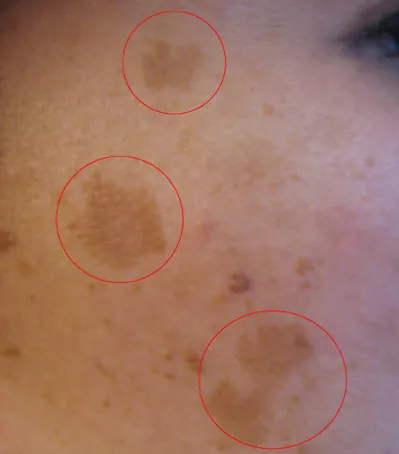

- Melasma: symmetrical patches on the cheeks and forehead that often return and are affected by sun and hormones.1
- Post-inflammatory hyperpigmentation: appears after a spot, inflammation or irritation, and is treated by dealing with the cause first.2
- Sun spots and sun-related pigment: well-defined patches that build up with sun exposure over the years.2
- Pigment around the eyes and in skin folds: each needs its own assessment and treatment.2
- A new patch with uneven colour, or one that changes: needs a medical examination before any cosmetic treatment.
How to start: sun protection first
- Broad-spectrum sunscreen: SPF 30 or higher every day; reapply every two hours outdoors and after swimming or sweating.46
- Tinted sunscreen: iron oxides help protect against visible light, which can worsen melasma, especially in darker skin. An untinted mineral sunscreen does not necessarily provide the same visible-light protection.6
- Extra protection: a wide-brimmed hat, shade and avoiding prolonged sun exposure. Treating melasma without consistent protection weakens results and raises relapse risk.14
What is the topical treatment?
- Triple-combination cream: contains hydroquinone, tretinoin and a mild topical corticosteroid for a clinician-defined course. It is an effective melasma option, not an indefinite unsupervised lightening cream; hydroquinone rules vary by country.14
- Alternatives: azelaic acid, kojic acid and vitamin C.14
- Tretinoin with a mild steroid: another option.4
- Irritation: raises the risk of dark marks, especially in darker skin, so several strong products are not added at once.5
- More detail: in the hydroquinone guide and the azelaic acid guide.
When do procedures and lasers come in?
- Chemical peels or microneedling: are not automatic first-line treatments; consider them only for selected patients after photoprotection and topical care, because irritation can worsen pigmentation.146
- Lasers: reserved for resistant cases after good protection and topical treatment,1 and a few studies found better results when added to medicine and sun protection.4
- The risk: high energy can trigger inflammation and more pigment in skin prone to pigmentation.
- Who performs them: a dermatologist.4
Is tranexamic acid suitable for melasma?
Oral tranexamic acid may be considered for selected resistant melasma, but melasma is an off-label indication in the United States. A studied expert-consensus regimen is 250 mg twice daily; that is not a patient-specific prescription and must not be started without clinical assessment.37
- Avoid with active or previous thromboembolic disease, important clotting risk or combined hormonal contraception under the expert consensus.7
- Before prescribing: review thrombosis, medicines, smoking and risk factors; investigations are individualized, not one mandatory coagulation panel for everyone.37
- Follow-up: reassess benefit and risk; oral treatment does not replace sunscreen or topicals, and melasma may relapse after stopping.17
Can melasma disappear permanently?
- Time: between 3 and 12 months with a treatment plan, longer if the melasma is long-standing.4
- Return: melasma often comes back after improving,1 and can last for years or a lifetime.4
- Prevention: sun protection helps it fade and helps stop it returning.4
- Pregnancy: can trigger melasma, which may fade after delivery or after stopping the medicine that caused it.4
- Realistic goal: strong improvement and as much relapse prevention as possible, not permanent disappearance after one session.
When should you see a doctor?
- A new patch, or one that changes in colour or shape.
- Persistent burning, redness or peeling from treatment.
- No improvement after 3 months of regular protection and treatment.
- A history of blood clots, or interest in tranexamic acid.4
- Pregnancy or pregnancy planning during any prescribed treatment.
Medical Evidence
- Delphi consensus on melasma management by international experts and the Pigmentary Disorders Society
- Global consensus on the management of melanin hyperpigmentation disorders
- Prescribing practices of tranexamic acid for melasma: Delphi consensus from the Pigmentary Disorders Society
- Melasma: Diagnosis and treatment
- Retinoid or retinol? (irritation and dark marks in darker skin)
- Melasma: Self-care; tinted SPF and iron oxides
- Oral tranexamic acid for melasma: risk screening and off-label use
Keep reading on this topic
- To compare treatment options, read what the best treatment for melasma is.
- On hydroquinone specifically, read whether it is safe for melasma.
- If you are considering laser, read whether laser helps melasma or makes it worse.
- To understand why visible light and iron oxides matter, see the tinted mineral sunscreen guide.