Hives (Urticaria): Causes, Treatment and When It Is an Emergency
Part of: Skincare
How acute and chronic hives differ, why many people never find the cause, which signs need emergency care, and the treatment ladder from antihistamines to modern biologic and targeted therapies.
Allergy & Hives · 2 min read · August 22, 2026
Written and medically reviewed by Dr. Yousef Abo Zarad · German board-certified dermatologist · Last reviewed: September 2026
Key takeaways
- Hives are raised, itchy welts, red or skin-colored; each welt usually fades within 24 hours.
- Hives that last more than 6 weeks and appear on most days are chronic hives.
- Many people never find a cause, yet hives can still be controlled well.
- Swelling of the face, mouth or throat, or trouble breathing or swallowing, is an emergency.
- Treatment starts with non-drowsy antihistamines, and effective newer treatments exist for people who don't respond.
What makes it hives?
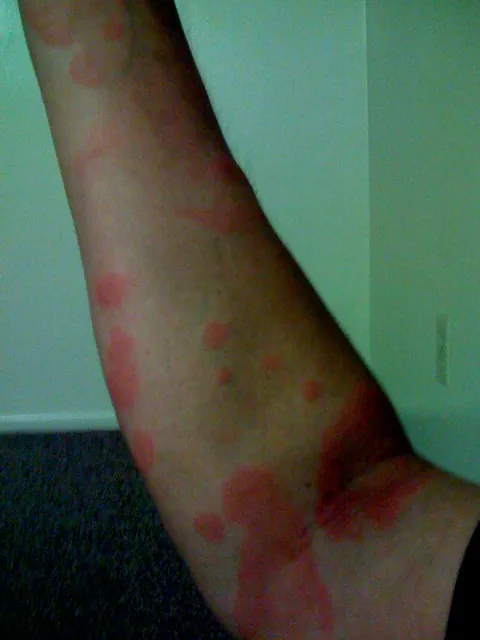

Hives are raised welts that look like insect bites, itch and sometimes burn, and move around and change shape. Each individual welt usually disappears within 24 hours while new ones appear elsewhere.
Deeper swelling of the eyelids, lips or hands, called angioedema, can occur alongside them.
Acute or chronic hives?
| Type | Duration | What it means |
|---|---|---|
| Acute hives | Clears within a few days to a few weeks | Often follows a trigger such as an infection, medicine or food |
| Chronic hives | More than 6 weeks, on most days of the week | Often spontaneous with no clear outside cause; needs a longer-term plan |
What triggers hives?
- Allergies: some foods, insect bites or stings, latex, some medicines, pet dander, plants and pollen.
- Physical triggers: heat, sweat, cold, sunlight, and pressure on the skin such as tight clothing, a bag strap or scratching.
- Stress.
- Infections, such as strep throat, urinary tract infections and COVID-19.
- Some medical treatments, such as radiation therapy and blood transfusions.
Why is the cause often not found?
Millions of people develop hives and never find the cause, especially with chronic spontaneous hives. Not knowing the cause does not mean the condition isn't real or can't be treated.
That is why broad, random allergy testing isn't routine. Your history decides whether a trigger is worth investigating, such as a newly started medicine or a clear link to cold or pressure.
A good test answers a specific clinical question; it shouldn't open twenty new ones.
Who is most likely to get chronic hives?
- Women aged 20 to 40; women overall are about twice as likely as men.
- People with atopic dermatitis (eczema).
- People who smoke.
When do you need emergency care?
- Swelling of the face, inside the mouth or in the throat.
- Trouble swallowing or breathing.
- Feeling light-headed or faint.
- A racing heart.
These symptoms can't wait for a clinic appointment. Call emergency services or go to the ER right away.
How are hives diagnosed?
A dermatologist usually diagnoses hives by examining the skin and listening to your history. Tests are ordered only when needed:
- Skin or blood allergy tests, if your history points to an allergic trigger.
- Blood work to rule out an infection or other illness.
- A skin biopsy in selected cases.
How are hives treated?
Success is measured in days free of hives and itch, not in how many medicines have been tried.
| Step | Treatment | Notes |
|---|---|---|
| First | Non-drowsy 24-hour antihistamines | The foundation in most cases; available without a prescription |
| Not controlled | Prescription antihistamines such as desloratadine or hydroxyzine, or a dose change under medical supervision | Don't increase the dose on your own |
| Resistant chronic hives | Omalizumab (Xolair) | Injection approved from age 12 |
| Resistant chronic hives | Dupilumab (Dupixent) | Approved for chronic spontaneous hives from age 2 |
| Resistant chronic hives | Remibrutinib (Rhapsido) | Tablet approved for adults; in studies 70% of patients had fewer hives after 12 weeks |
| Selected cases | Cyclosporine | Calms the immune system; needs monitoring with blood tests |
| Severe flare | A short course of oral corticosteroids | Not a long-term treatment for chronic hives |
What can you do at home?
- Take your antihistamine daily as prescribed, not only when the itch starts.
- Use a soothing anti-itch lotion.
- Avoid triggers you've noticed, such as tight clothing if pressure sets off your hives.
- Note what you ate and did on flare days; it may reveal a repeat trigger.
Common questions
- Are hives contagious? No.
- Are chronic hives a food allergy? Usually not; most chronic hives are spontaneous with no food cause.
- Do chronic hives go away? They can last months or years in some people, but the right treatment controls them.
- Are steroids the answer? Only as a short course for severe flares, not for long-term use.