Alopecia Areata: Does Hair Grow Back, and What Are the Treatments?
Part of: Hair & scalp
What alopecia areata is and how it looks, whether hair regrows on its own, how it's diagnosed, treatments from corticosteroid injections to modern JAK-inhibitor pills, and how to manage appearance during treatment.
Hair · 1 min read · August 22, 2026
Written and medically reviewed by Dr. Yousef Abo Zarad · German board-certified dermatologist · Last reviewed: September 2026
Key takeaways
- Alopecia areata is an autoimmune disease in which the body attacks hair follicles, but usually doesn't destroy them, so hair can regrow.
- Many people, especially children, regrow hair without treatment, more often when there are few patches present for less than a year.
- Corticosteroid injections into patches regrow at least half the hair in more than 80% of patients within 12 weeks.
- Modern JAK-inhibitor pills are an option for severe, extensive disease.
- Regrowth is slow, and results take months.
What does it look like?
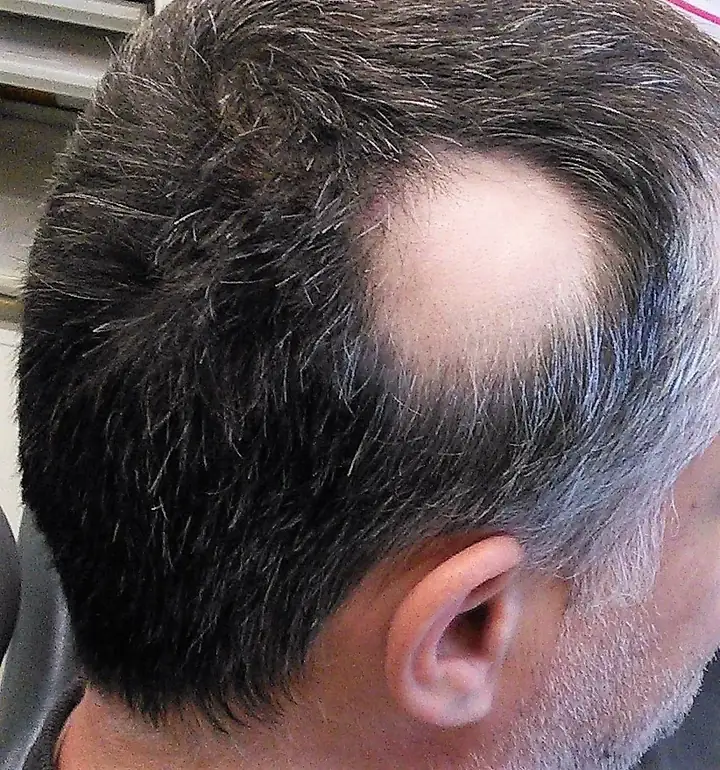

It usually appears as a smooth, round bald patch with normal skin, no scale or scarring. There may be one patch or several, and it can affect the beard, eyebrows and eyelashes.
What are the types?
| Type | What it means |
|---|---|
| Patchy | One or a few bald patches |
| Alopecia totalis | Loss of all scalp hair |
| Alopecia universalis | Loss of all body hair |
How is it diagnosed?
- Examining the patches, often with a dermatoscope.
- Checking the nails, which can be affected.
- Sometimes a scalp biopsy.
- Blood tests for thyroid disease, iron and vitamins when needed.
Does hair grow back on its own?
Yes, for many people, especially children. The chance is higher when there are few patches present for less than a year. It can't be predicted precisely, and treatment may speed regrowth and limit spread.
What are the treatment options?
JAK inhibitors need medical monitoring and blood tests, and your doctor decides whether they suit you.
| Treatment | For whom | What to expect |
|---|---|---|
| Corticosteroid injections into patches | Limited patches | Every 4 to 6 weeks; results within 3 months, with more than 80% regrowing at least half their hair within 12 weeks |
| Topical corticosteroid or anthralin | Patches, especially in children | Once or twice daily |
| Minoxidil | To help maintain regrown hair | 2 to 3 times daily |
| Contact immunotherapy | Extensive loss | Weekly visits for 6 months; success ranges from 17% to 75% |
| JAK inhibitors (baricitinib, deuruxolitinib, ritlecitinib) | Severe disease; ritlecitinib from age 12 | Can give 50% or greater regrowth, sometimes including eyebrows and eyelashes |
Managing appearance during treatment
- Wigs or hairpieces.
- Artificial eyelashes and eyebrow powder.
- Microblading of the eyebrows, which lasts about 6 months to a year.
- Some men prefer shaving the head.
Common questions
- Is alopecia areata contagious? No.
- Is it caused by stress? It's an autoimmune disease; stress may precede some flares, but it isn't the only cause.
- Can it come back after regrowth? It can recur in some people, and early treatment helps.