Male Pattern Hair Loss: Minoxidil, Finasteride and When Results Show
Part of: Hair & scalp
How male pattern hair loss starts, why starting early matters, how to use minoxidil, how effective finasteride is and its side effects, what happens if you stop, and where PRP, laser and transplants fit.
Hair · 3 min read · August 22, 2026
Written and medically reviewed by Dr. Yousef Abo Zarad · German board-certified dermatologist · Last reviewed: September 2026
Key takeaways
- Male pattern hair loss usually starts with a receding hairline or thinning at the crown.
- By age 50, more than half of white men show visible signs of it.
- Finasteride slows hair loss in 80% to 90% of men, and minoxidil strengthens hair and stimulates growth.
- Results take 6 to 12 months, and the benefit is lost if you stop treatment.
- The earlier you start, the more hair you keep.
Why timing matters
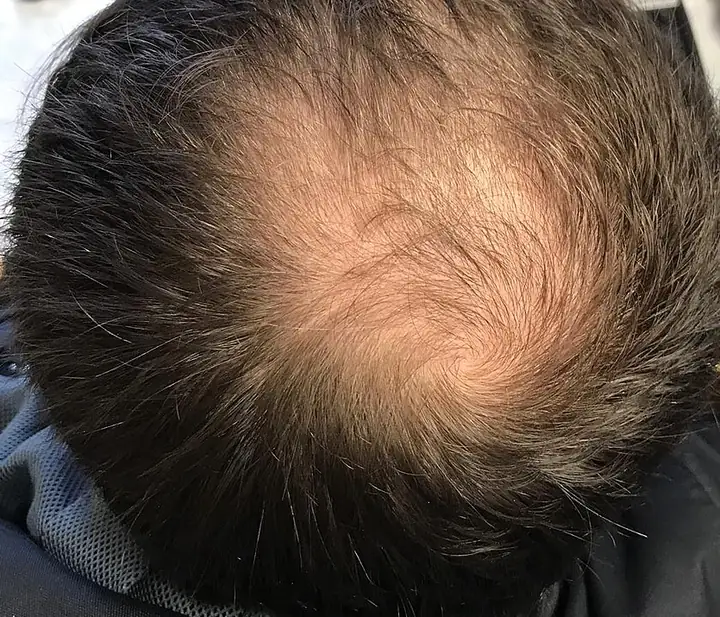

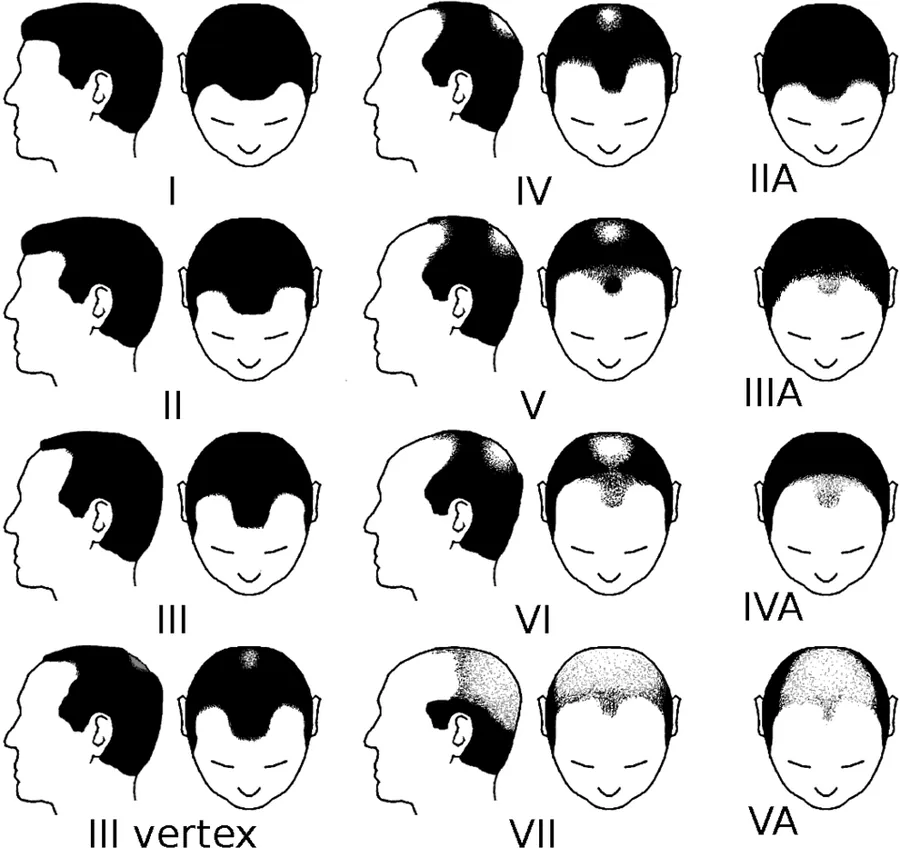

In male pattern hair loss, follicles gradually shrink, so hair becomes thinner and shorter before it disappears. Treatments work best on follicles that are still there, so starting early preserves more hair than trying to regrow hair lost years ago.
How can you tell it's male pattern hair loss?
- A front hairline that recedes year after year.
- Thinning or a bald spot at the crown.
- Thinner, shorter hair in these areas.
- Gradual progression through the stages described by the Norwood scale.
What are the main treatments?
Finasteride's sexual side effects can continue in some men even after stopping. Discuss this with your doctor before starting.
| Minoxidil (topical) | Finasteride (tablet) | |
|---|---|---|
| How it's used | On the scalp twice a day, every day | One tablet daily |
| Effectiveness | Reduces hair loss, stimulates growth and strengthens hair | Slows hair loss in 80% to 90% of men |
| When results show | 6 to 12 months | About 6 months |
| If you stop | The benefit is lost | Hair loss returns |
| Side effects | Scalp irritation or itch, sometimes headache | Lower libido or erection problems, breast tenderness or swelling, depression |
Other options
- PRP: an add-on option; evidence is encouraging but limited.
- Low-level laser: another add-on option.
- Hair transplant: for suitable, stable cases, usually alongside medical treatment to keep the rest of the hair.
When to see a doctor
- If hair loss starts suddenly or you notice defined bald patches, which may point to another cause such as alopecia areata.
- If your scalp is scaly, itchy or painful.
- If you want to start finasteride or discuss its side effects.
Common questions
- Do I need treatment for life? Male pattern hair loss continues, and the benefit lasts as long as you stay on treatment.
- Can minoxidil and finasteride be combined? Yes, it's common, and your doctor sets the plan.
- Does a transplant replace medicine? Usually not; medicine preserves the native hair around the transplanted area.
Minoxidil or finasteride for male pattern hair loss?
Minoxidil and finasteride are not interchangeable. Minoxidil mainly supports hair growth and helps keep thickness, while finasteride reduces the effect of DHT, the hormone linked to male pattern hair loss. Either can be used alone, or they can be combined in selected cases after weighing the benefits and risks.
Recent pooled data show that topical minoxidil combined with finasteride may give greater improvement than minoxidil alone in some men, but choosing the formulation and how to use it cannot be separated from discussing side effects and individual suitability.
The better question is not "which is stronger?" but "what is your pattern of hair loss, and which treatment can you keep up safely?"
When do results of treatment for male pattern hair loss show?
Hair treatment is measured in months, not weeks. With minoxidil, judging the result may take about 6–12 months for some men. With finasteride, noticeable improvement may also start after several months. So no difference in the first month is not proof that the treatment has failed.
- Photograph the hairline and crown in the same light and angle before starting.
- Compare photos every few months, not every day.
- Stopping early makes a useful treatment look as if it did not work.
What happens if I stop minoxidil or finasteride?
If the treatment is keeping your hair and you stop it, its benefit is usually lost gradually, because the tendency to pattern hair loss has not gone away. That does not mean the medicine "ruined the hair"; it means the support that was slowing the problem or keeping thickness has stopped.
Before starting a long-term treatment, ask yourself whether the plan is sustainable, because consistency is part of effectiveness.
Medical Evidence
- What is male pattern hair loss, and can it be treated?
- Comparing minoxidil-finasteride mixed solution with minoxidil solution alone for male androgenetic alopecia: a systematic review and meta-analysis of randomized controlled trials
- What is male pattern hair loss, and can it be treated?
- Hair loss: Diagnosis and treatment
Keep reading on this topic
- To see when a difference usually appears, read how long minoxidil takes to work.
- For women, usage and common mistakes are in the guide to minoxidil 5% for women.
- For causes, diagnosis and treatment in detail, see the guide to shedding versus pattern hair loss.
- For a direct side-by-side comparison, read the difference between telogen effluvium and pattern hair loss.