Atopic Eczema: Causes, Symptoms and Treatment
Part of: Skincare
What atopic eczema is and why it comes back, how it looks in babies, children and adults, what triggers flares, and how it is treated step by step, from daily skin care to newer treatments for severe disease.
Eczema · 4 min read · August 22, 2026
Written and medically reviewed by Dr. Yousef Abo Zarad · German board-certified dermatologist · Last reviewed: September 2026
Key takeaways
- Atopic eczema is a chronic inflammatory skin condition that starts with itch; the rash follows scratching and comes in flares that settle and return.
- It results from genes, the immune system and a weak skin barrier, not from poor hygiene.
- Daily moisturizing is core treatment for everyone and reduces the need for medicines.
- Flares are treated with anti-inflammatory creams or ointments; moderate to severe disease has newer injectable and oral options.
- Yellow crusts or widespread painful blisters signal infection and need urgent review.
What is atopic eczema?
It is often called "the itch that rashes": intense itch comes first, and scratching creates the rash and damages the skin further.
It usually starts in early childhood but can continue into adulthood or begin in adults. It is chronic and not cured outright in many people, but it can be controlled well with the right care and treatment.
What causes it?
Children with eczema may later develop other allergic conditions such as asthma or hay fever, known as the "atopic march".
- Genes: many people with eczema have a relative with eczema or an allergic disease such as asthma or hay fever.
- The immune system: an abnormal immune response drives inflammation and itch.
- A weak skin barrier: "gaps" in the protective layer let water out and irritants and germs in.
- Environment: urban living, pollution and dry or cold climates raise the risk.
What triggers flares?
Triggers differ between people; learning and avoiding your own triggers reduces flares.
- Skin-care products and cleansers, especially fragranced ones.
- Weather changes, and dry or cold air.
- Rough fabrics or wool.
- Stress.
- Long, hot baths or showers that dry the skin.
What does it look like? Symptoms by age
- Babies and young children: a rash or bumps on the cheeks, forehead and scalp, dry scaly skin, and constant rubbing that disturbs sleep.
- Older children and teens: itchy patches in the creases of the elbows, knees and ankles, creases or discoloration under the eyes, and thickened skin from scratching.
- Adults: hands and feet are often affected and may be the only sites, with thickened, discolored skin around the eyes and leathery patches after years of scratching.
- On darker skin: redness may be subtle; bumps and darker areas are more typical, and they may look gray or violet-brown.
How is it diagnosed?
A dermatologist usually diagnoses it by examining the skin and asking about symptoms and any family history of eczema or allergies. No single test confirms it; other tests may be used to rule out look-alike conditions or to look for a trigger.
Daily care: the foundation of treatment
- Moisturize at least twice a day, even when the skin looks fine.
- Choose a thick cream or ointment without fragrance rather than a light lotion; petroleum jelly is an inexpensive option that suits many children.
- Bathe for 5 to 10 minutes in lukewarm water, then apply moisturizer immediately while the skin is still damp.
- Avoid your known triggers, such as certain products, fabrics and overheating.
Moisturizer is not cosmetic: it is treatment that protects the skin from cracking and reduces flares and the need for medicines.
During a flare
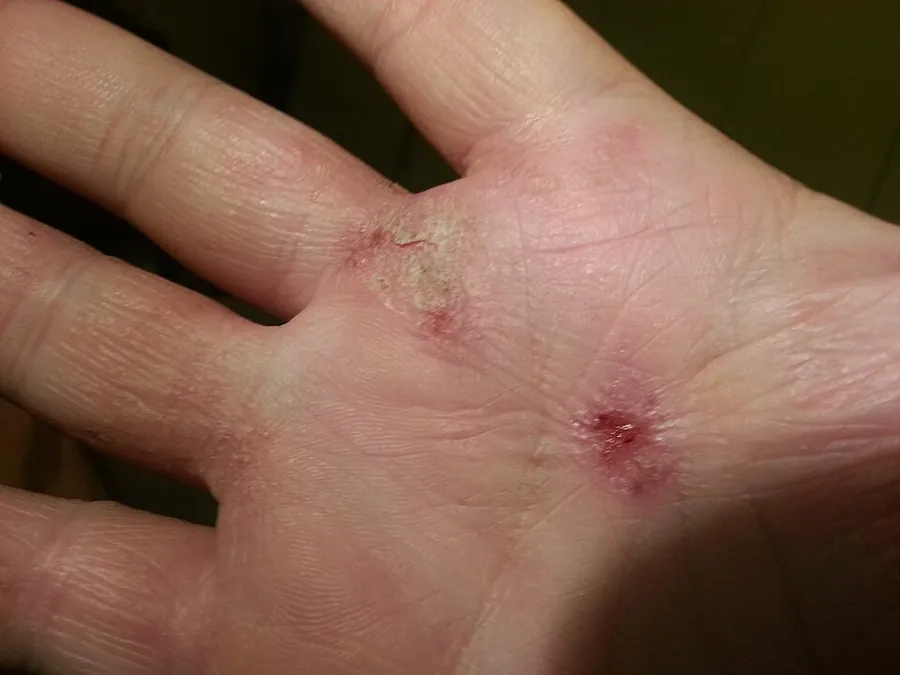

When redness and itch increase, the skin needs anti-inflammatory treatment chosen by the doctor according to age, body site and severity.
- Topical corticosteroid creams and ointments: the best-known first-line treatment for flares.
- Tacrolimus ointment and pimecrolimus cream: non-steroid options that are especially useful on the face and skin folds.
- Newer non-steroid creams such as crisaborole, ruxolitinib, tapinarof and roflumilast; availability varies by country.
- Wet wraps: apply moisturizer or medicine, cover with a damp layer and then a dry one, to calm itch and help the treatment absorb.
Treating moderate to severe eczema
When daily care and creams are not enough, stronger options are chosen by a dermatologist according to age, severity and overall health.
| Category | Examples | Notes |
|---|---|---|
| Phototherapy | In-clinic ultraviolet light treatment | Two to three sessions a week; this does not mean tanning beds or sunbathing |
| Injectable biologics | Dupilumab, tralokinumab, lebrikizumab, nemolizumab | For moderate to severe eczema; approved ages differ by medicine |
| Oral JAK inhibitors | Abrocitinib, upadacitinib, baricitinib | Age 12 and older, with medical monitoring and blood tests |
| Conventional immunosuppressants | Cyclosporine, methotrexate, azathioprine, mycophenolate | For selected cases under close monitoring |
Complications
- Staph infection: yellow or golden crusts on the rash.
- Molluscum contagiosum: small viral bumps that spread on eczema-affected skin.
- Eczema herpeticum: widespread painful blisters caused by the herpes virus, needing immediate treatment.
- Thickened, cracked skin when scratching continues without treatment.
- Anxiety, depression, isolation and poor sleep because of itch.
When to seek medical review quickly
- Yellow crusts, discharge or increasing pain in the rash.
- Widespread painful blisters, especially with fever or feeling unwell.
- A widespread flare that does not respond to usual care, or eczema that disrupts sleep, school or work.
Common questions
- Should I moisturize when eczema is calm? Yes. Regular moisturizing between flares reduces relapses and the need for medicines.
- Is eczema caused by poor hygiene? No. It results from genes, the immune system and a weak skin barrier.
- Do sunbathing or tanning beds help? They are not recommended; phototherapy is given in clinic at measured doses.
- Is it lifelong? It usually starts in childhood and may continue into adulthood or begin in adults. The realistic goal is good control of flares.
Key numbers
- About 70% of people with eczema have a relative with eczema or an allergic disease.
- About one-third of children with eczema later develop asthma, and about two-thirds hay fever.
- Phototherapy: two to three sessions a week.