Acne Scars: Choose the Treatment by Scar Type
Part of: Acne
Ice-pick, rolling and boxcar scars are not the same problem. This guide shows how to think about treatment in the right order instead of chasing a different device every month.
Guides · 4 min read · August 22, 2026
Written and medically reviewed by Dr. Yousef Abo Zarad · German board-certified dermatologist · Last reviewed: August 2026
The short answer
Choose the treatment by scar type, not by device: ice-pick scars usually need a focused treatment such as TCA CROSS, rolling scars usually need subcision to release tethering, and boxcar scars depend on their depth.
Most faces have more than one type, so treatments are combined in order, once active acne is controlled.
Start with the scar type, not the device
The most common mistake is treating every acne scar as one condition. Shape, depth and whether the scar is tethered underneath determine what needs release, resurfacing or a more targeted technique.
That is why the same treatment can be excellent for one person and disappointing for another even when both simply say they have acne scars.
The quick map
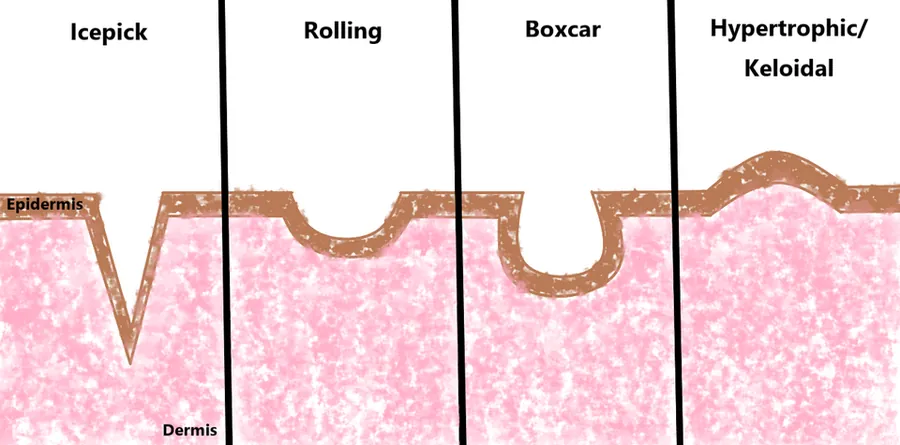

- Ice-pick: narrow and deep; often needs targeted approaches such as TCA CROSS, with selected scars sometimes suited to minor surgical techniques.
- Rolling: tethering under the skin is often the key issue, so subcision may matter more than starting with laser.
- Boxcar: depth and edge definition matter; shallow scars may respond to resurfacing while deeper ones often need a combined plan.
- Post-acne pigmentation is not an indented scar and should be treated as a different problem.
If you do not know the scar type, do not start by choosing the machine. Diagnosis comes before technology.
Why combination treatment is common
Most faces contain more than one scar type. Tethered scars may need release, superficial texture may need resurfacing, and pigmentation often needs its own treatment path.
A strong plan is not about stacking the largest number of procedures into one session. It is about fixing the main limiting factor first, then refining the surface.
When should you expect results?
Scar improvement is usually gradual. The realistic goal is meaningful improvement rather than perfectly erasing every mark. Session count and spacing depend on scar type, depth, skin tone, active acne and the technique used.
What do I start with?
- Acne that is still active → control the activity first, before an intensive scar program.
- Scars tethered from below → release the tethering first; resurfacing alone may not reach the cause.
- Brown or red color without a dip → this is a mark after inflammation, not a depressed scar; its treatment path is different.
The smart order: stop the breakouts → release what is tethered → treat each scar by its shape → improve texture and color at the right stage.
What Dr. Yousef does not do
Dr. Yousef does not repeat fractional CO₂ laser five times for tethered scars without asking why they have not improved. Nor is subcision done for every dip just because the technique is popular. A scar needs to be described before the procedure.
- Do not stack strong procedures just to say the session is stronger.
- Do not expect skin with no trace at all; the goal is realistic, gradual improvement.
- Do not ignore the skin's tendency to pigment when choosing energy and recovery.
CO₂ or RF microneedling for acne scars?
The choice between fractional CO₂ laser and RF microneedling is not made by device name alone. The scar type, skin tone, tendency to pigment, acceptable downtime, and whether there is fibrous tethering under the scar are what change the decision.
Recent comparisons suggest fractional CO₂ may give stronger improvement in some atrophic scars, but it is usually linked to more pain, longer redness and a higher chance of post-inflammatory pigmentation than RF microneedling. So RF microneedling may be the better fit when pigment safety or shorter downtime is the priority, while CO₂ may be the stronger option in selected cases after a direct assessment.
If the scar is tethered from below, comparing CO₂ and RF alone may be the wrong question; it may need subcision first.
When do I need subcision for acne scars?
Subcision is considered when rolling scars or some depressed scars are tethered to the tissue beneath. The idea is not simply putting a needle under the skin, but releasing fibrous bands that stop the scar from lifting.
- Rolling scars with clear tethering under the skin: among the patterns most likely to benefit.
- Narrow, deep ice-pick scars: subcision is not usually their main treatment.
- Boxcar scars: the decision depends on depth, edges and whether there is tethering beneath.
- Bruising, swelling, pain, lumps under the skin and pigmentation are possible complications, so technique and patient selection matter.
How many sessions do acne scars need?
There is no single number that fits all scars. Someone with tethered rolling scars needs a different path from someone with ice-pick or shallow boxcar scars, and the plan may need more than one technique rather than repeating the same procedure.
The response is assessed after each stage instead of promising a fixed number of sessions in advance. The realistic goal is clear, gradual improvement, not a promise to erase the scars completely.
Do acne pits on the face disappear for good?
Atrophic scars are a structural change in the skin, so "permanent removal" is not an accurate medical description. Depth, edges, texture and shadow can improve a great deal when treatment is chosen by scar type, but the result varies from person to person.
The best result comes from treating the scar's shape and its structural cause, not from repeating one device for every type of pit.
Medical Evidence
- Fractional CO2 Laser Versus Micro Needling Radiofrequency for Post Acne Scarring: A Meta-Analysis of RCTs
- Comparative Efficacy and Safety of Fractional CO2 Laser and Gold Microneedling Radiofrequency for Atrophic Acne Scars: A Systematic Review
- Complications of Subcision for Acne Scarring: Experience From Clinical Practice and Review of the Literature
- Acne scars: Consultation and treatment
- Procedural and surgical treatment modalities for acne scarring: Part II
- Energy-based devices for the treatment of Acne Scars: 2022 International consensus recommendations
Keep reading on this topic
- For rolling scars specifically, read the best treatment for rolling scars.
- For deep ice-pick scars, read the best treatment for them.
- To weigh laser against radiofrequency, read CO₂ laser or RF microneedling for acne scars.
- To tell a mark from a scar, read the difference between acne marks and scars.